Navigation Home Gallery Blog Articles Tools and Reference About Links

Holy shit: "Filminator" DIY film coating machine

Posted June 15, 2008 in Camera Hacking & DIY

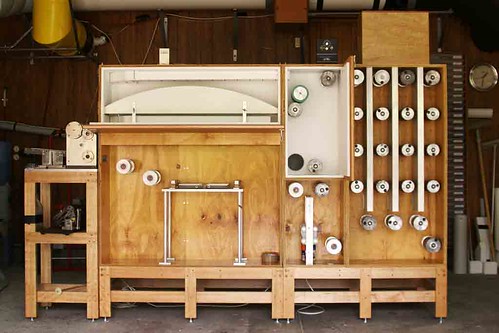
Flickr member Dark Orange says: Can’t buy the film you want any more? Just make the stuff! In this set you will find random photos and information on a project a friend has undertaken – a machine to make his own camera film. Plastic and goop go in one end, and camera film comes out [...]

Continue reading...
(end of story slug)

Homemade flash diffusor from take-away container

Posted July 19, 2006 in Camera Hacking & DIY

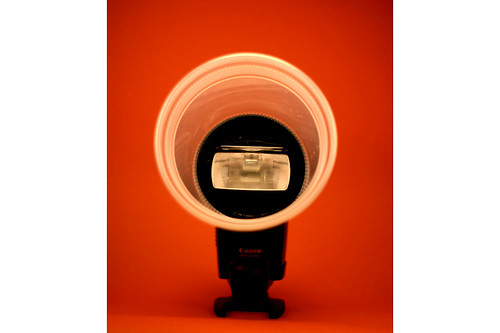
Flickr member potatomato posted a photo set on how he made a flash diffusor from a plastic take-away container. He writes: The Gary Fong Lightsphere is a flash diffuser that is gaining popularity with wedding and portrait photograhers world wide. His product is selling at a pace that the manufacturer can’t keep up with. This [...]

Continue reading...
(end of story slug)

Homemade ultra-wide medium format camera

Posted May 1, 2006 in Camera Hacking & DIY

Check out Flickr member Zaphod Beeblebrox‘s homemade ultra-wide 6×9 camera! Makes me wonder why some of the ultra-wides sold by commercial manufacturers charge over a thousand US dollars for what’s essentially a lens board to film back spacer. (Though, in all fairness, they do throw in a spirit level.) Via MAKE Blog

Continue reading...
(end of story slug)

Cheap DIY homemade reflector stand

Posted March 31, 2006 in Camera Hacking & DIY

"This reflector panel holder made of 3/4 inch PVC pipe is handy if you have a spare tripod to use. The tripod provides a stable base that can be adjust for height and tilt angle. Reflector is the collapseable type used for an auto windshield (31 x 38 inches)…" Continue reading at DIYphotoraphy.net Via MAKE [...]

Continue reading...
(end of story slug)

Homemade anamorphic camera

Posted March 10, 2006 in Camera Hacking & DIY + Pinhole

f295 member Andrew has converted his homemade anamorphic pinhole camera—where instead of light going straight through the opening and striking the film head-on, the film is formed into a circle and the light is projected into its center from above—to use a lens, and the results are stunning! Andrew writes, "To get a lens anamorphic [...]

Continue reading...
(end of story slug)