How to flip the lens on a Lex35/Vivitar T100 crapcam

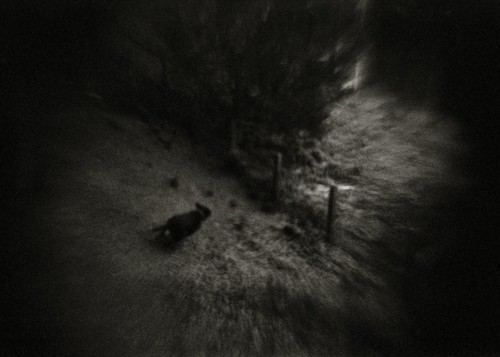
Addled dog chasing ball by Eben Ostby

The Lex35/Vivitar T100 is a crappy, hackable, cheap, plastic camera. Above is Eben Ostby‘s result from flipping and spacing the lens. He writes:

I don’t have pictures to show what I did, but if you look at my photostream, you’ll see a few "addled" photos that were done with a Lex 35 with a flipped lens. Here’s what I did:

Took apart the Lex35 [Eben’s instructions, with photos, are here].

Took the lens "board" off by removing its two screws. On the back of the lensboard, there’s a plastic ring that holds the lens in place, and which can be popped off by prying it gently with a screwdriver or such.

The lens comes out and can be reversed and placed in the front part of the lens-holder – in the stepped rings that are visible from the front. I used a thick washer to hold it in place, but you can improvise something else… tinfoil, glue, putty… I dunno. With the lens pushed as far back as I could get it to go, it the camera "focuses" (if that’s really the word) from about 2 feet to 30 feet. Sort of.

I also tried flipping the lens around but putting it back in the back part of the lensboard. If you do this, you’ll need to shim the lensboard away from the body of the camera, and use longer screws (such as the ones that hold the body of the camera together). And the focus is worse.

I’ve gotta say, I’m thrilled at having a screwed up Lex35 like this. It just made my week.

You can pick up a Vivitar 100 (same as the Lex35 except it has a tripod mount) for US $1.95 from American Science & Surplus.

Related: Lex 35/Vivitar T100 bulb shutter/multiple exposure mod how-to here on Photon Detector
Edward Levinson’s "Heartgraphy" pinhole photography show, Tokyo, JP

The show will include some first time showings of Edward‘s "Fears and Hopes" series of dioramas, masks, and figures, as well as images from the series in his new book "Timescapes Japan" [blogged previously].

There will be a one day workshop on September 23 [2006] concentrating on doing pinhole portraits.

Signed copies of the new book will be on sale as well as original prints!

The show runs 19 September–1 October, 2006, at Roonee 247 Photography, Misuzu Bldg 1F, Yotsuya 4-11, Shinjuku-ku, Tokyo, Japan. Gallery hours are 12–7pm (closed on Mondays).

Opening reception on Tuesday, 19 September, 2006 at 6:00pm.

Via Pinhole Visions

Harman Professional photo inkjet paper

HARMAN Technology Limited Press Release:

Harman, the leading professional imaging specialist has provided the first ever glimpse of its new professional photo inkjet paper, just days before officially unveiling the products to the industry at the Photokina exhibition in Cologne, Germany. This exclusive shot of the product and its packaging has only been distributed to selected online media and is the only picture to be made available before the Photokina show. The picture shows the first two products in the range, which incorporate a real photo Baryta layer within their coating – the only photographic inkjet media to do so. The matt finish product pictured, will incorporate instant-dry silica technology. Created primarily for the fine art and professional photography market, HARMAN wanted the real users to see the innovative products first.

Howard Hopwood, Marketing Director at HARMAN technology commented: "At HARMAN technology, we believe ourselves to be very much a part of the photographic community. We are very enthusiastic about the launch of our first professional photo inkjet products, and we wanted the people who will benefit most from using them to see the products first."

The black boxes will provide a strong presence on shelf, and colour coding has been used within the artwork to easily identify each individual product in the range. Product test packs will be distributed to the photographic media over the coming weeks, and detailed launch plans are due to be announced in the very near future.

Via PhotographyBLOG

How to modify a Polaroid SX-70 for 600 film

Adrian Hanft (of Lego pinhole camera fame) wrote a nice, step-by-step tutorial on converting a Polaroid SX-70 camera—whose Time Zero film has been discontinued—to take the still-available 600 film. He writes:

Polaroid 600 film actually fits in an SX-70 camera pretty easily. The problem with using 600 film in the SX-70 is that it is four times more sensitive than SX-70 film. Without modification, all your photos taken with 600 film would be overexposed. To correct this problem, we are going to adjust the camera by two stops. We will use a one stop neutral density filter to cover the lens, and we will remove the neutral density filter that covers the photocell. If you are wondering why we are adjusting by two stops when the film is four times faster, here is a quick math lesson. One stop is equivalent to doubling (or halving depending on which direction you are going) the amount of light. So, 2×2=4. Alright, lets get started.

Read tutorial at Found Photography

Photographer Mr. E Cipher launches kickass Web site

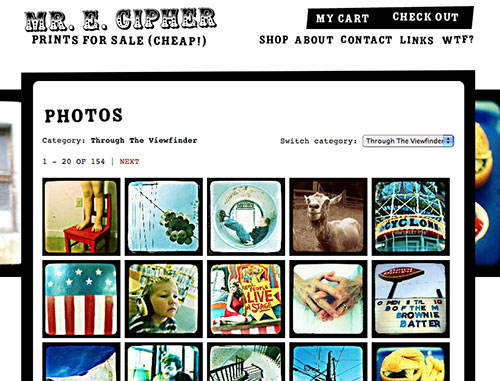
Screenshot of Mr. E Cipher's new Web site

Photographer Mr. E Cipher has just launched a Web site, and I’m happy to report that it kicks as much ass as his work does. Seriously. It looks great, is easy and straightforward to use, communicates the necessary info, and doesn’t bog you down with a bunch of irrelevant crap or 8-second cross-fades between images while still getting his unique style across—it lets you get down to the business of looking at and buying good photography. Hallelujah!

The screenshot says “Prints for sale (cheap!)”, and it isn’t lying: you can’t beat an 8×8 of badass photography for $25 with a stick.

Check him out at mr-e-cipher.com.

Sekonic Digital Master L-758 light meter

JP Distribution Press Release:

JP Distribution is pleased to announce the new Digital Master L-758 Light Meter from Sekonic. The Digital Master L-758 is the world’s first multi-functional light meter that can be calibrated to match the sensitivity of a digital cameras sensor at all ISO settings, flash/ambient or file format characteristics. Sekonic have ensured that the L-758 offers photographers the greatest digital exposure control, accuracy and repeatability.

Main Features:

  • Three different camera exposure profiles that can be stored and quickly recalled when switched from one camera to another
  • USB cable allows all camera exposure profile data to be uploaded from a PC or MAC computer to the L-758
  • Exposure Latitude Warning – this will flash on the analogue scale if a measured highlight or shadow has exceeded the dynamic range or clipping point of your camera
  • Memory mode which can store up to nine readings in both Aperture Priority and Shutter Priority Modes.
  • One-degree Spot with Digital Display
  • Preset filter compensation values.

For any additional information on Sekonic, please contact JP Distribution:

Telephone: 01782 753304
Fax: 01782 753377

This looks like a good tool for film as well as digital shooters—exposure latitude warnings would be useful no matter what—but it also causes me to ask why the hell this is necessary to begin with. It’s great that this tool fills a void, but why the hell can’t camera manufacturers make ISO 100 actually ISO 100 to begin with? The S in ISO stands for Standards, and I think that calling something a standard and not adhering to it is false advertising. Camera makers, sort yourselves out!

Via PhotographyBLOG

mooncruise* September 2006 issue 2.04 is up

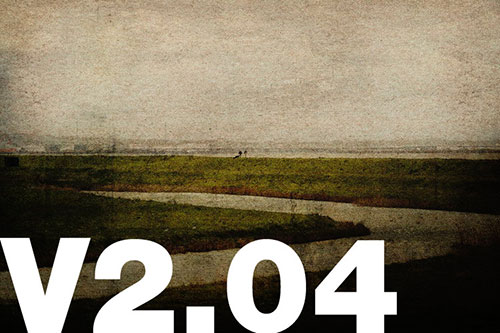
Cover of mooncruise issue 2.04, September 2006

The September 2006 issue (Vol 2, Issue 4) of mooncruise*, an online magazine featuring photography and music by international artists, is now up and ready for viewing.

In this issue

PHOTOGRAPHY by: Anthony Kurtz, Brian Sorg, Fred Heuning, Gavin Thomas, Geert Oeser, Gianna Schade, Grant Willing, Holger Stoehrmann, Jacob Carter, Johnny Mcmillan, Jon Ongkiehong, Kevin Convery, Martin Reeves, Rob Larson, Trevor Brady, Vivian Wong, and Wheat Wurtzburger.

MUSIC by: Namaste

mooncruise.com (requires Flash 8)