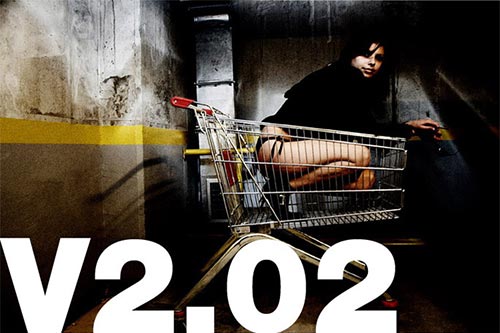
mooncruise* July 2006 issue 2.02 is up

Cover of mooncruise issue 2.02, July 2006

The July 2006 issue (Vol 2, Issue 2) of mooncruise*, an online magazine featuring photography and music by international artists, is now up and ready for viewing.

In this issue

PHOTOGRAPHY by: Andrea Ferrer, Adam Makarenko, Adelyn Leong, Andrea Ferrer, David Mitchell, Davide Bernardi, Elena Ciobanu, Eran Mahalu, Espen Aasheim, Julia Blank, Lesley Silvia, Matthew Moore, Peter Schmucki, Robert Jan Zuur, Roberto C. Madruga, Sazeli Jalal, Ted Kerr, Thomas Ekstrom, Tim Schroeder, Tod Seelie, Tomas Minambres Lara.

MUSIC by: Phowa

mooncruise.com (requires Flash 8)
The Monkey Arm: DIY flexible clamp tripod

I truly detest carrying around a tripod unless I know I’m going to need it. However, I do find myself needing an extra level of stability quite often. To solve the problem I threw together this, The Monkey Arm. The Monkey Arm consists of a length of Locline with a clamp epoxied on one end and a quarter twenty screw on the other. Locline is a modular hose system used predominantly in salt water aquarium tanks.

Read instructions at Munkey Film

Via MAKE Blog

Fujifilm Fine Art Museum inkjet paper

Fuji press release:

Fuji Hunt’s dedicated R&D division has long been developing methods to bring digital printing media to a par with traditional papers. Now, a new trio of especially smooth finishes have passed the quality barrier and represent the very best materials on which imagery of all types can be printed.

Fuji Hunt’s range of FUJIFILM Fine Art Museum inkjet media, which has already proven extremely popular with users seeking a higher than average result, especially when used for display and exhibition work in both black-and-white and colour, has been extended with three additional products: Fine Art Museum Baryt paper; Fine Art Museum Smooth RAG paper; and HD White Cotton Canvas.

Baryt, or baryta, photographic paper has long been recognised for its superior smooth finish. Traditionally, the baryta sizing used on this paper overcomes any fibrous effect by filling the pores of the paper via a barium sulphate suspension, the material then being calendered to produce an exceptionally smooth surface. This gives images printed on it a high level of sharpness, maximum tonal range and separation, while also avoiding contamination by any impurities in the paper base.

Creating baryt paper is an extremely specialist process, and it is usually only used for the best hand finished fine art printing. However, with FUJIFILM Fine Art Museum Baryt paper, Fuji Hunt has launched a unique inkjet 300gsm version which incorporates all the benefits of a silver halide baryt paper, and enables a superb level of reproduction or original imaging to be achieved across a wide range of applications.

In fact, the density rating (d-max) of the product is higher than that of traditional silver halide baryt paper, enabling images to be created which exhaustive testings and close examination have shown to be of a higher grade than pure silver halide.

Initially, FUJIFILM Fine Art Museum Baryt paper is being supplied in roll form in sizes to fit all the FUJIFILM/EPSON Stylus Pro printers, with cut sheet form in sizes up to A3+ (329x483mm, 13x19ins) due in the autumn.

The current Fujifilm Fine Art 300gsm Photo Rag paper is a mould-made fine art paper with special matt coating which has proven a leading medium for high quality fine art reproductions. Now, the company is introducing a unique smooth version called, appropriately, FUJIFILM Fine Art Museum Smooth RAG paper.

The unique structure of this material ensures not only that beautifully finished and highly contrasted images will result, but also that the material will stay flat, without the curling which often faces users of smooth heavyweight media.

Canvas materials have long been popular for printing reproductions of works of art and for showing fine art photographic work to its best. So it is that Fuji Hunt is completing the new smooth trio with a high-density 400gsm brilliant white canvas called FUJIFILM HD White Cotton Canvas.

This specially coated pure cotton canvas brings a vitality to images printed on it which was not previously possible on authentic canvas materials. Its brilliant white finish enables bright, vivid colours to be shown as fresh as newly painted. When used for black-and-white prints and reproductions, this product comes into its own as it produces maximum contrast images with the full gamut of subtle mid tones and shades.

Altogether, these new media take the field of inkjet printing to a new level of excellence and authenticity not previously possible, and are expected to make a strong impact on its markets.

For full details of the FUJIFILM Fine Art Museum media contact Greg Jackson at Fuji Hunt Digital Solutions by telephone: 02476 455 575, email: gjackson@fujhunt.com or visit www.fujihunt.com

Via PhotographyBLOG

Nancy Breslin’s pinhole photography in group show

Check out this summer group show of contemporary art, "Dwell, Bond, Connect", including pinhole photography by Nancy Breslin.

The show runs Saturday, 15 July through Saturday, August 19, 2006 at Gallery Imperato, 921 E. Fort Avenue, Suite 120, Baltimore, MD, US.

The gallery is open Tues–Thurs 11–7; Fri–Sat 11–9; Sun 1–7.

Opening reception on Saturday, 15 July, 2006 at 6:00 pm.

For more information, see the gallery’s Web site, galleryimperato.com.

Via Pinhole Visions

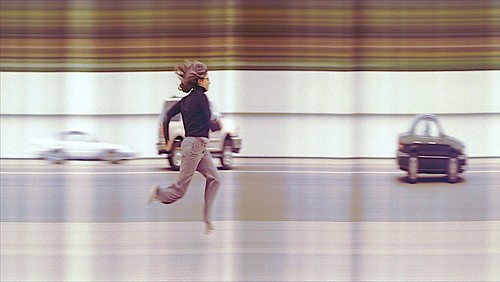
Strip photography with a Hasselblad V-series

beige ford explorer by a nose strip photo by Dan Loflin

Wicked-talented photographer Dan Loflin has written up a tutorial on strip photography with a Hasselblad V-series camera and A-series film magazine (he used an A12 back on a 503cw). Check it out:

It’s pretty simple to rig a hasselblad into an amatuer strip camera, as I’ve done, without altering the mechanics of the camera in any way. However, the results won’t be as perfect as Scott’s (photoace) without a motor drive. You’ll probably get the horizontal banding and inconsistently shaped subjects that you see in my photos. I personally like those qualities, but some might not. I’m working on a bracket not too dissimilar from [Andrew] Davidhazy‘s to take more control over these qualities on my next go ’round.

1 – Creating the 1mm slit: On the back of the camera body, surrounding the rear curtain, is a beveled ridge that mates perfectly with the magazine to seal out the light. Inside that bevel there is enough space to tape two small, thin pieces of black cardboard to leave a 1mm slit. You’ll want to mount the card board so the slit runs horizontally, as the film in a hasselblad runs vertically. I used some really nice, super black, soft-tack permacel paper tape to secure them…

Continue reading instructions and discussion in the Strip Photography group at Flickr

While you’re at it, have a look at Loflin’s photography. He’s a one-man photograpic freakshow who’ll seemingly try any process at least once—and rock it. Even his masking material is pimpin’; Permacel is the Cadillac of gaff photo tape.

DIY light activated shutter release for Canon DSLR cameras

Jessica Bussert writes:

I came up with this idea after reading a previous Make post about another Canon project… I went out and bought a photoresistor and a relay, and after a few minutes with the soldiering iron, I had built myself a light activated shutter release. I then rigged up the following "studio", and proceeded to take a few hundred photos of milk splashing in a pan filled with lots more milk.

Read plans and sample photos at Ms. Bussert’s site

Via MAKE Blog

Schonauer’s summer photography reading list

The editor-in-chief [of American Photo magazine] ruminates on the best photography book ever written, plus several new titles worth diving into.

This summer I plan to read the best book on photography ever written. Actually, I’ll be rereading it. First published 36 years ago, the book was passed down to me by Sean Callahan, the founding editor of American Photographer magazine, the forerunner of American Photo. Sean told me at the time that it was the best book ever written about photography, and he was right. It’s been sitting on a bookcase shelf in my office for years and years, dog-eared and finger-smudged from constant referencing. This summer I’m going to pick it up again and look at it closely, from beginning to end. It will be like discovering the magic of photography all over again.

Continue reading at American Photo

Thanks to Paul Beard of A Crank’s Progress for sending this my way!

Cost of US copyright registration increasing

The cost of registering copyright goes up July 1, 2006, the U.S. Copyright Office has announced on their Web site.

Registering a single photograph or groups of photographs goes up $15 USD to the new price of $45 USD. Renewing a copyright without an addendum increases from $60 to $75, and renewing a copyright with an addendum goes up from $30 to $220.

Continue reading summary at the National Press Photographers Association

New rate schedule at the US Copyright Office

Via Utata